
Turbulent Flow Characterization of a Fan-Stirred Constant Volume Combustion Chamber Using Large Eddy Simulation
Turbulent Flow Characterization of a Fan-Stirred Constant Volume Combustion Chamber Using Large Eddy Simulation
In our newly published study, we used high-fidelity Large Eddy Simulation (LES) to support the design of a fan-stirred constant volume combustion chamber (CVCC) at the LEC. The chamber is intended for future experiments on turbulent premixed flames of ammonia and ammonia–hydrogen mixtures. Our goal was to evaluate whether the design of the fans and CVCC generates homogeneous, isotropic turbulence while keeping the mean flow as low as possible. Future work will extend the simulations to assess the influence of varying initial pressure and temperature conditions on the flow field.
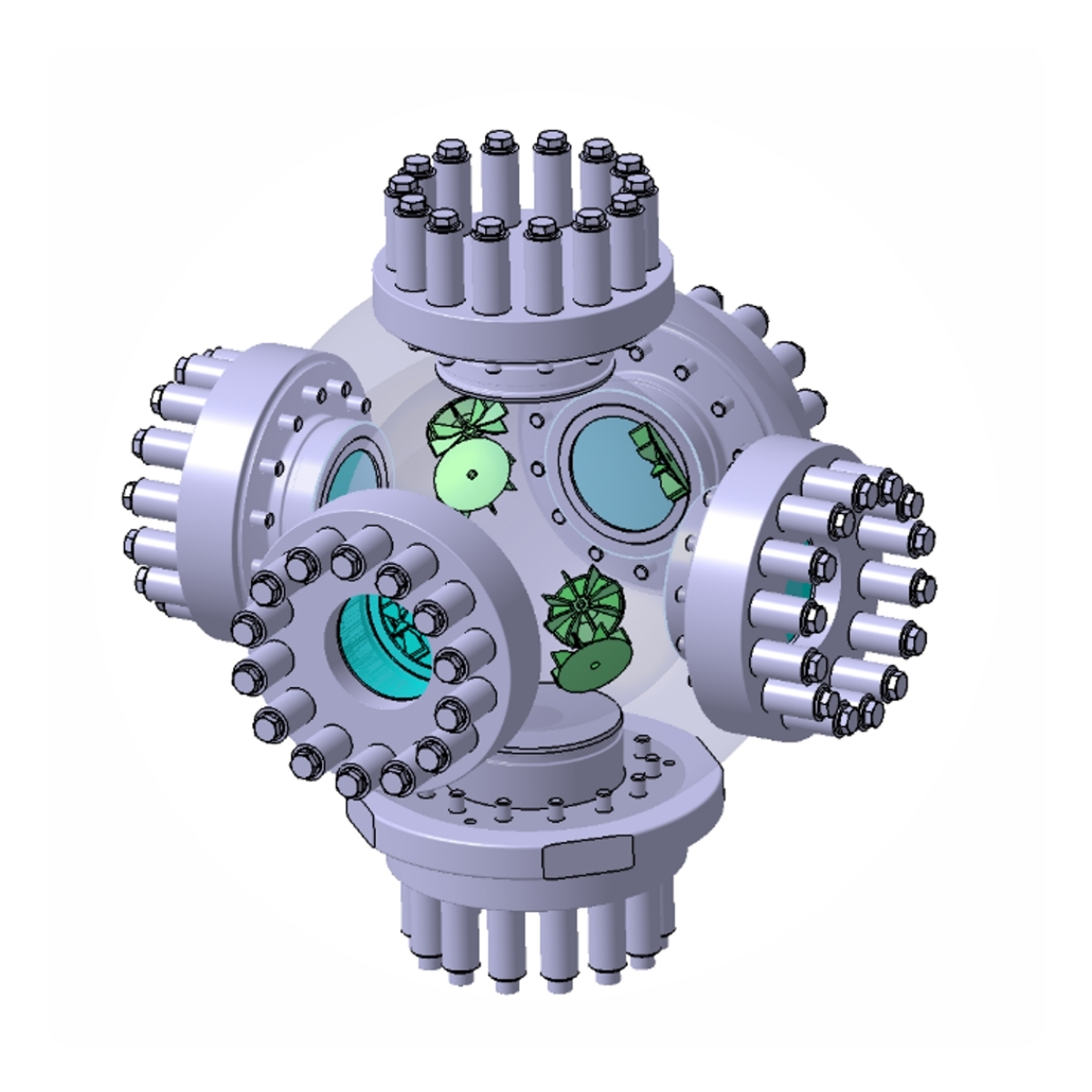
Figure 1: Design of optimized fan-stirred CVCC
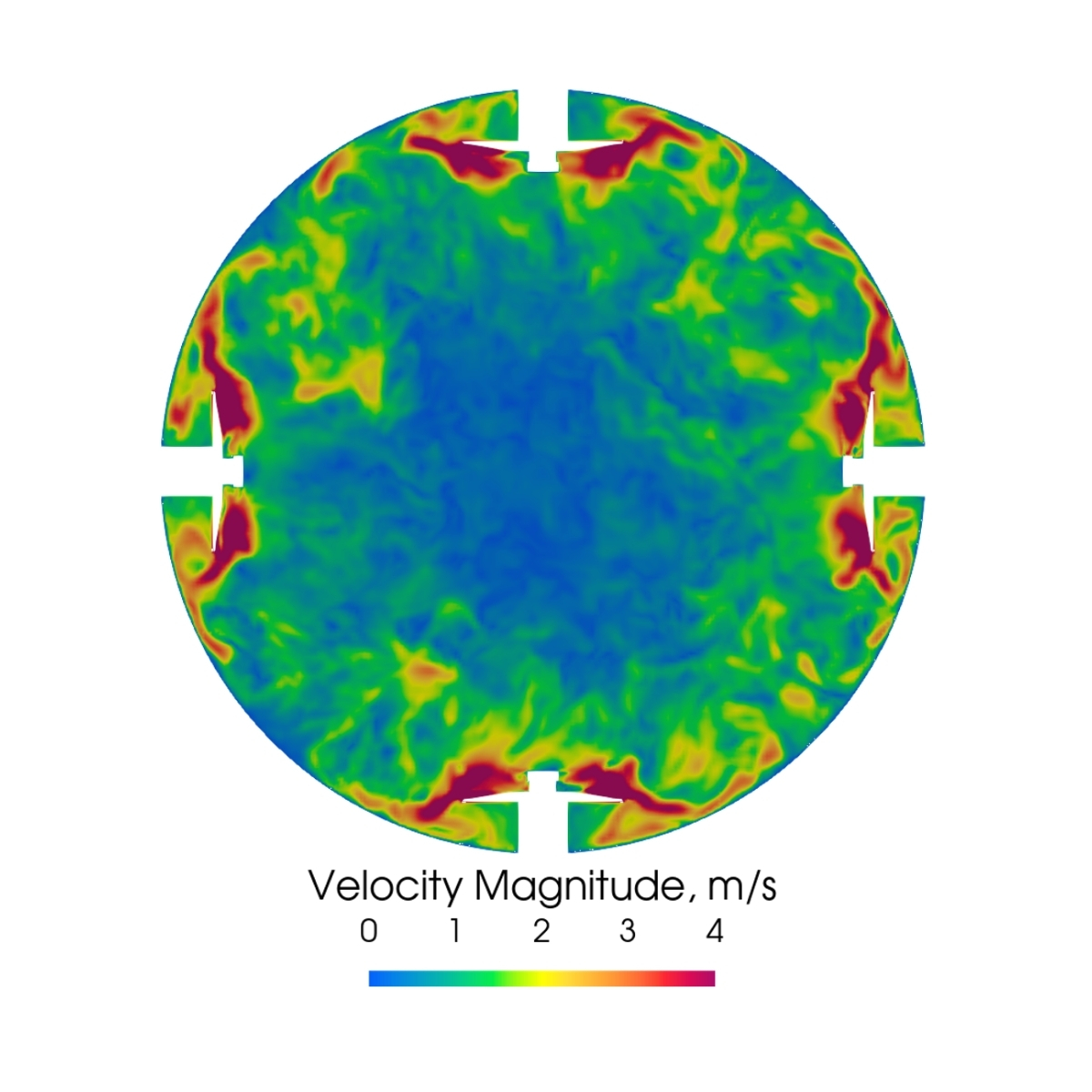
Figure 2: Contours of the velocity magnitude of the instantaneous flow field for a fan speed of 2000 rpm.
Key Highlights:
- Linear scaling of turbulent intensity with rotor rotational speed
- Turbulence intensities of up to 3 m/s achieved
- Large and rotational speed-independent integral length scales of approximately 11 mm
- Homogeneous, isotropic turbulence with minimal mean flow in the optical measurement region
Why it matters:
The results confirm that the proposed chamber can produce turbulence conditions relevant to large engines. This provides the basis for controlled experiments investigating how turbulence affects the propagation of ammonia and ammonia–hydrogen flames — a key step toward using ammonia as a carbon-free fuel in future combustion systems.
Read the full paper here:
👉 Click here to read the full paper in the prestigious Springer Nature Journal:
Congratulations to the author team:
Paula-Maria Handle-Kesselring, Clemens Gößnitzer, Marc Klawitter, Stefan Posch, Helfried Steiner
Thanks to our supporters and sponsors:
The authors would like to acknowledge the financial support provided through the “COMET Module LEC FFF”. The module is funded under the “COMET – Competence Centers for Excellent Technologies” programme by the Austrian federal government, specifically the Federal Ministry of Innovation, Mobility and Infrastructure (BMIMI) and the Federal Ministry of Economy, Energy and Tourism (BMWET), as well as by the federal states of Styria and Tyrol. The COMET programme is managed by the Austrian Research Promotion Agency (FFG).
#Ammonia #CombustionResearch #LES #Turbulence #LEC #comet2gether #ForschungWirkt